Xinjiang Tianshan
Introduction
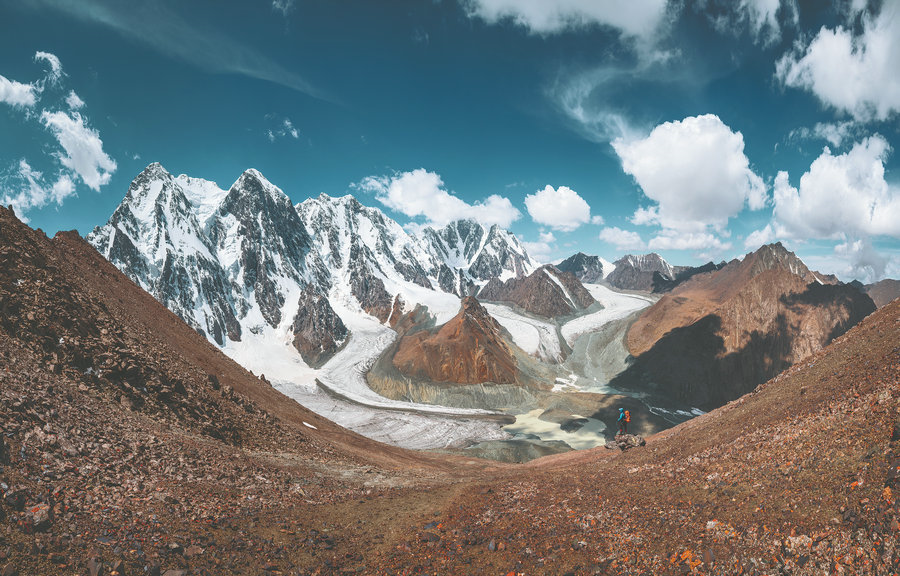
The Xinjiang Tianshan refers to the eastern part of the Tianshan Mountains located in China, extending for 1760 kilometers. It makes up more than two-thirds of the total length of the Tianshan range and stretches across the entire Xinjiang Uygur autonomous region. This monumental range is a breathtaking expanse of extraordinary landscapes and ecological diversity. It encompasses four main regions: Tomur, Kalajun-Kuerdening, Bayinbukuke, and Bogda. These components collectively showcase the unique physical geography of the area, featuring stunning snow-capped mountains, glacial peaks, pristine forests, lush meadows, and clear rivers and lakes. The red bed canyons add a striking contrast to the desert landscapes nearby, such as the vast Taklimakan Desert – noted for its large dunes and intense dust storms. This juxtaposition of hot and cold, dry and wet, desolate and luxuriant environments makes Xinjiang Tianshan an exceptional visual spectacle.
The significance of Xinjiang Tianshan extends beyond its scenic beauty. In 2013, it was inscribed on the World Heritage List, recognized for its outstanding example of ongoing biological and ecological evolutionary processes. The region serves as a vital habitat for endemic and relic flora species, including some that are rare and endangered. The preservation of landforms and ecosystems since the Pliocene epoch further underscores its ecological importance. The area's unique location between two deserts and its Central Asian arid continental climate enhances its status as an exceptional representative of mountain ecosystems in a temperate arid zone.
Geography and Climate
Xinjiang Tianshan stretches east-west for about 1,760 kilometers, anchored by Tomur Peak in the west, which rises to 7,443 meters, and Bogda Peak in the east at 5,445 meters. This mountain range is uniquely positioned between the Junggar Desert to the north and the Tarim Desert to the south. Its geographical features include not just its towering snow and glacier-capped peaks but also its rich biodiversity. The varying altitudes, gradients, and slopes create different moisture and heat conditions, leading to diverse altitudinal vegetation zones.
This variance is emblematic of the ongoing biological and ecological evolution within the Pamir-Tianshan Highlands. The stark contrast between the bare rocks of the south slope and the lush forests and meadows to the north exemplifies the distinct climatic and environmental conditions that coexist in Xinjiang Tianshan. This difference is not only a visual marvel but also a critical factor in the region's ecological studies, particularly in understanding the effects of global climate change on mountain ecosystems.
The climate of Xinjiang Tianshan is heavily influenced by its location and topographical diversity. As a temperate arid zone, the region experiences significant temperature fluctuations between seasons, with harsh winters and relatively mild summers. This climatic pattern plays a crucial role in the life cycles of the native flora and fauna, supporting a range of species that have adapted to these conditions over millennia.
Natural Heritage
The natural heritage of Xinjiang Tianshan is defined by its unspoiled landscapes and rich biodiversity, which have been preserved for millions of years. As part of the largest mountain chain in the world's temperate arid region, the Xinjiang Tianshan showcases an impressive variety of landforms and ecosystems that have evolved since the Pliocene epoch. This evolutionary process has resulted in a unique mix of flora and fauna, including numerous endemic and rare species. The region is also a crucial habitat for relic species, providing a living laboratory for understanding the ecological and biological evolution that has occurred in the Pamir-Tianshan Highlands.
The Tianshan Mountains' diverse ecosystems range from lush forests and alpine meadows to arid deserts and wetlands. These ecosystems support a wide array of species, many of which are adapted to the specific climatic conditions of the region. The altitudinal vegetation distribution, coupled with the varied moisture and heat conditions, creates a complex ecological tapestry that is both fascinating and vital for scientific research. The presence of the Taklimakan Desert adds another layer of ecological complexity, with its large dune forms and frequent dust storms influencing the surrounding environments.
Cultural Significance
Beyond its natural wonders, Xinjiang Tianshan holds great cultural significance. This mountainous region has been a cradle of human civilization and activity for centuries, with various cultures and peoples having traversed its landscapes. The Tianshan Mountains have long been a corridor for cultural exchange, trade, and migration, contributing to the rich tapestry of human history in Central Asia. The diverse cultures that have inhabited or interacted with the region have left an indelible mark on its cultural landscape, reflected in the traditions, languages, and practices of the people who call this region home.
The cultural heritage of Xinjiang Tianshan is also evident in the traditional practices and lifestyles of the indigenous communities that inhabit the region. These communities have maintained a deep connection with the land, drawing on its resources sustainably while preserving their cultural identities and traditions. The region's inclusion in the UNESCO World Heritage List has further highlighted its cultural importance, bringing increased attention to the need for preserving both its natural and cultural treasures.
Legends and Stories
Xinjiang Tianshan is steeped in legends and stories that enrich its historical and cultural narrative. One such legend is Tianshan Pai, a northern style of kung fu believed to have originated in the Tianshan Mountains. This martial art emphasizes rhythm, power, and the coordination of the entire body, incorporating both graceful movements and powerful strikes. According to legend, this ancient style has been passed down through over 60 generations, embodying the spirit and resilience of the people who have lived in this mountainous region.
The Tianshan Tuomuer Grand Canyon, known as the "king of the canyon," is another site rich in legend and natural wonder. Located at the foot of Tuomur Peak, this canyon is characterized by its red layer formations and dramatic landscape. The canyon's aesthetic value and geomorphic richness have made it a site of both natural beauty and enigmatic mystery, attracting visitors from around the world who are captivated by its breathtaking scenery and the stories that add depth to its allure.








